
Senior Member

Joined: 11/12/2020
Location: CanadaPosts: 138
| Posted: 12:31pm 15 Jun 2025 |
So the Wiseguy inverter has been running reliably for about 7 weeks, and I have been slowly dialing in the 60Hz frequency. I have the software at 60+ and external clocks that use the line frequency are losing ~17 seconds per day. This is pretty good, but I would like to improve it if possible. FYI, I measured the frequency of the 3 Nano processors I have and they vary significantly (from 15.860-15.947mHz).
Anyway, yesterday I noticed the inverter was not running and was displaying this message.
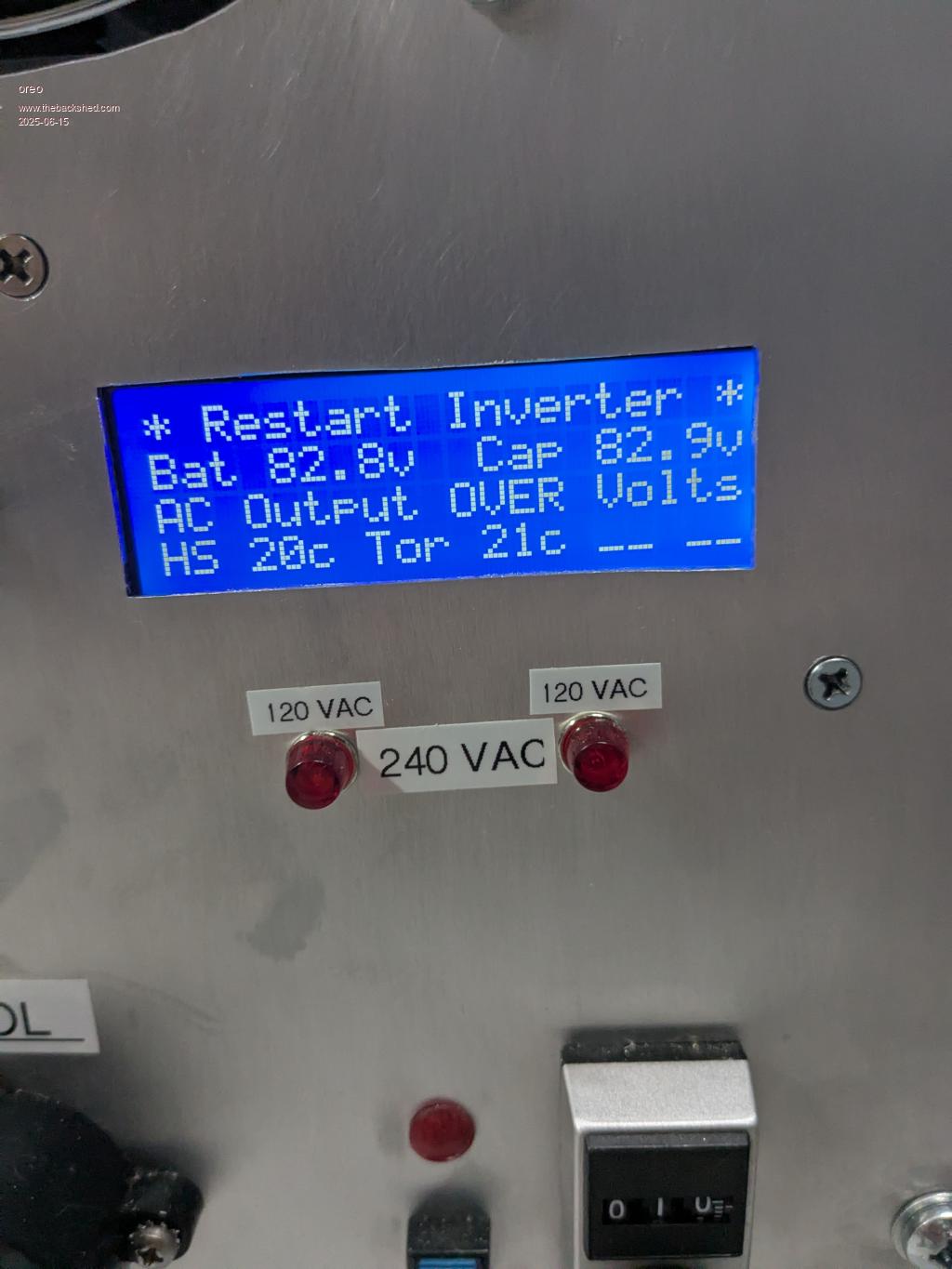
I shut off and restarted the inverter, and it started and settled back to 240vac. I left it and when I returned an hour later, it had tripped again. Further attempts to restart the inverter resulted in it immediately tripping with AC output overvoltage.
So I monitored the voltage on pin A0 of the Nano.
With a separate 120v source plugged into J2, I measure 1.4 volts on A0 and the display reads 120VAC. This is what it should be I think.
When I reconnect J2 back to the output of the inverter and turn it on, the voltage on A0 ramps up to 3.0v. I tried increasing the over voltage trip to 280v, and it still tripped. The display briefly displayed 290vac during the attempted power up.
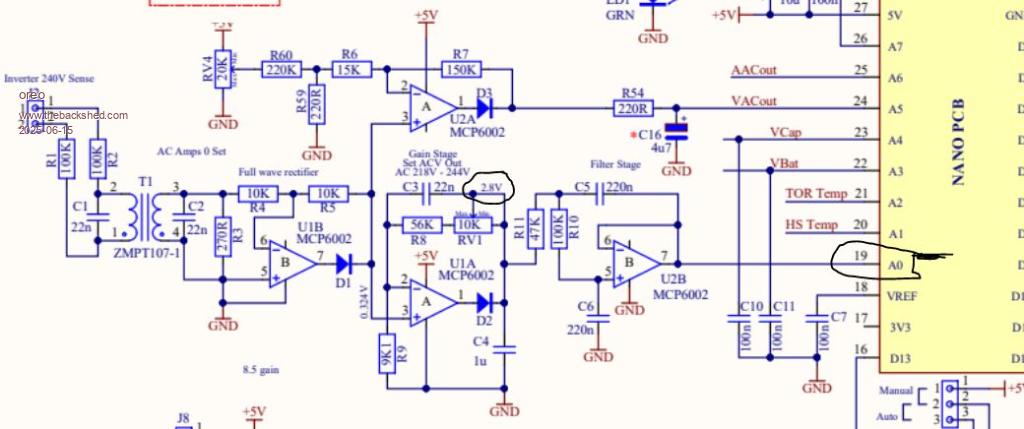
Since the voltage being fed into the Nano on pins A0 and A5 looks to be correct, I figured there must be a problem with the Nano itself. I swapped it out with another, and after getting the new Nano set up, it does the exact same thing.
The 5v power supply measures 5.03v and the 12v supply looks good too.
The output of the inverter when in test mode is a perfect looking sine wave.
Any suggestions on what to check next?
I do have a spare board, which needs just a few components so I will build that up and swap it. (probably tomorrow)
Right now for grounding, I have the .01uf Capacitor in place (near the LR mounting screw), and have the cast heat sink directly under the board. I believe the preferred method would be to have an additional isolated plate under the Nano, which is attached to the .01uF capacitor. I will try this first.
thanks