| Author |
Message |
Gizmo

Admin Group

Joined: 05/06/2004
Location: AustraliaPosts: 5193 |
| Posted: 05:37am 05 Jul 2026 |
 Copy link to clipboard Copy link to clipboard |
 Print this post |
|
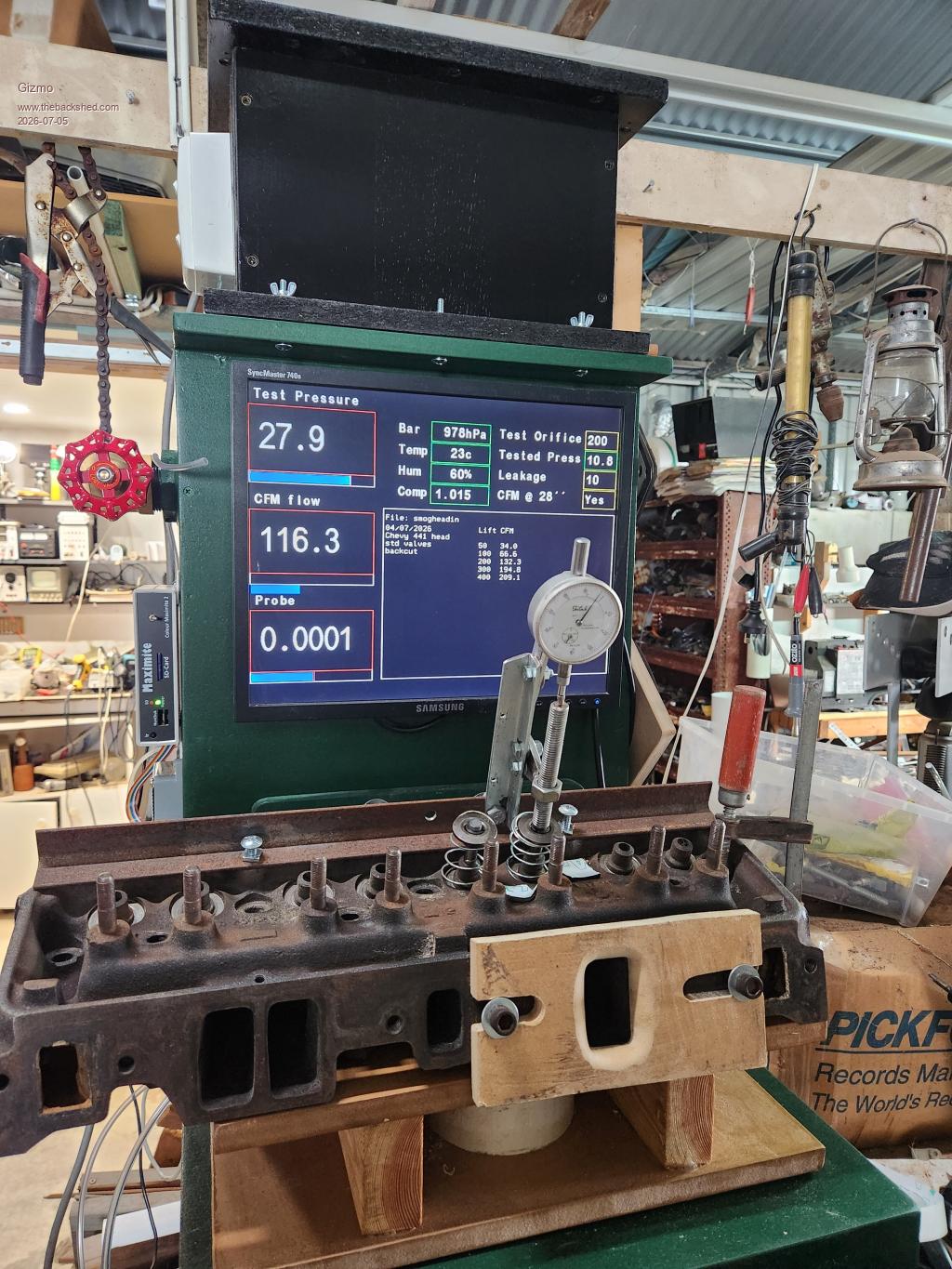
A flow bench is a tool used by anyone serious about getting more horse power out of a engine. The flow bench can tell you the CFM of a cylinder head, carburetor, exhaust, plus lets you measure or restrict flow in parts of the "port" to find turbulence, dead air, etc.
Recently I've been working on a set of heads for my old Monaro, and was using the services of another flow bench, but decided it was time to build my own.
This is my second flow bench, I built one back in the 80's when I played around with Datsuns.
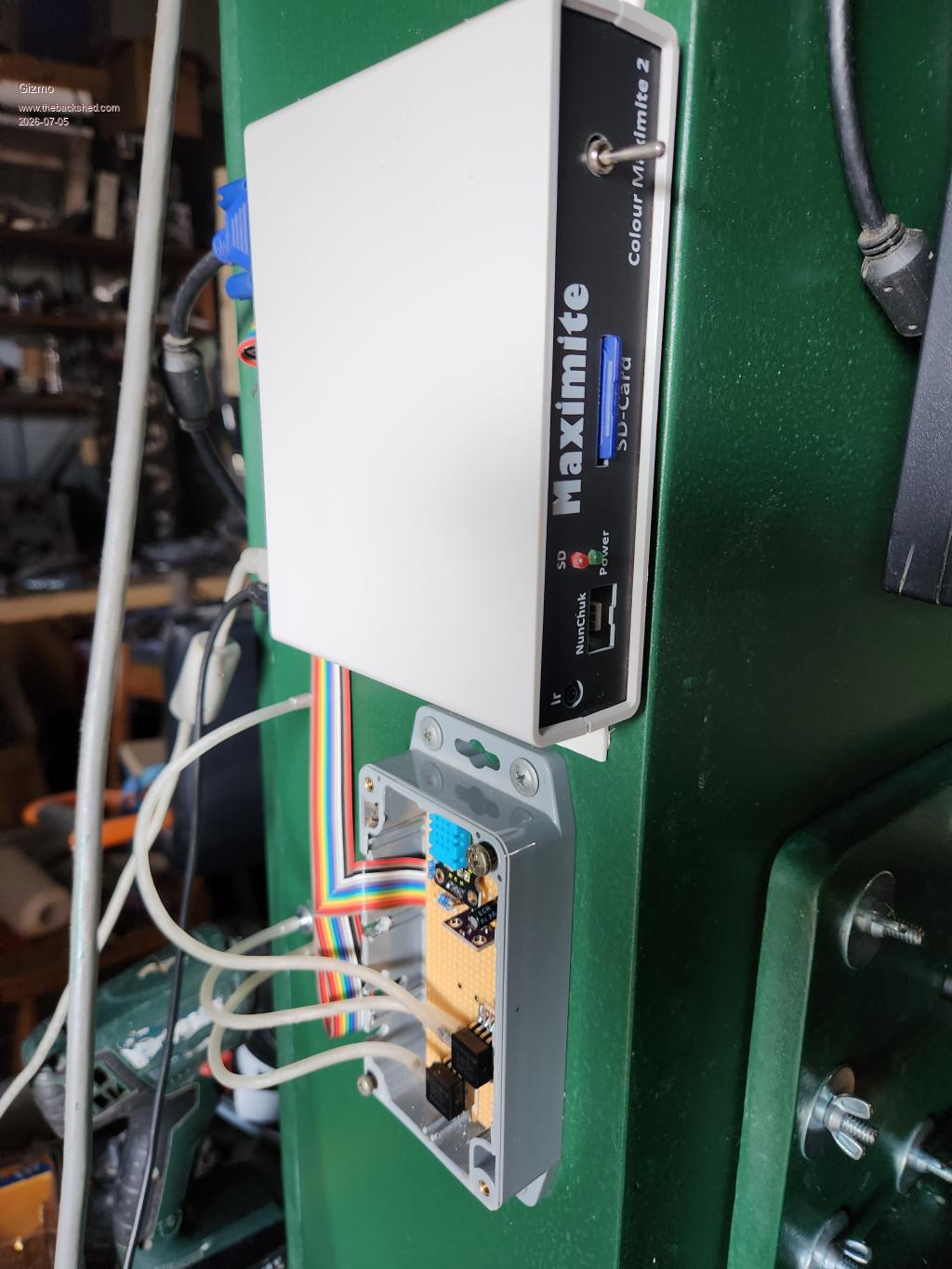
I wont go into details of how a flow bench works, other that to say it uses a few vacuum/pressure sensors, and "test orifice" used to measure the flow, vacuum motors ( 2 in my case ), humidity, kPa and temperature sensors to improve the accuracy, and a bunch of math.
My bench is constricted from 12mm MDF. I used 8mm coreflute cut into strips and glued together to give laminar flow inside the cabinet on each side of the test orifice. The cabinet was sealed inside and out, then painted, as MDF is porous and leaks air. The air pumps are a pair of 1300 watts vacuum cleaner motors.
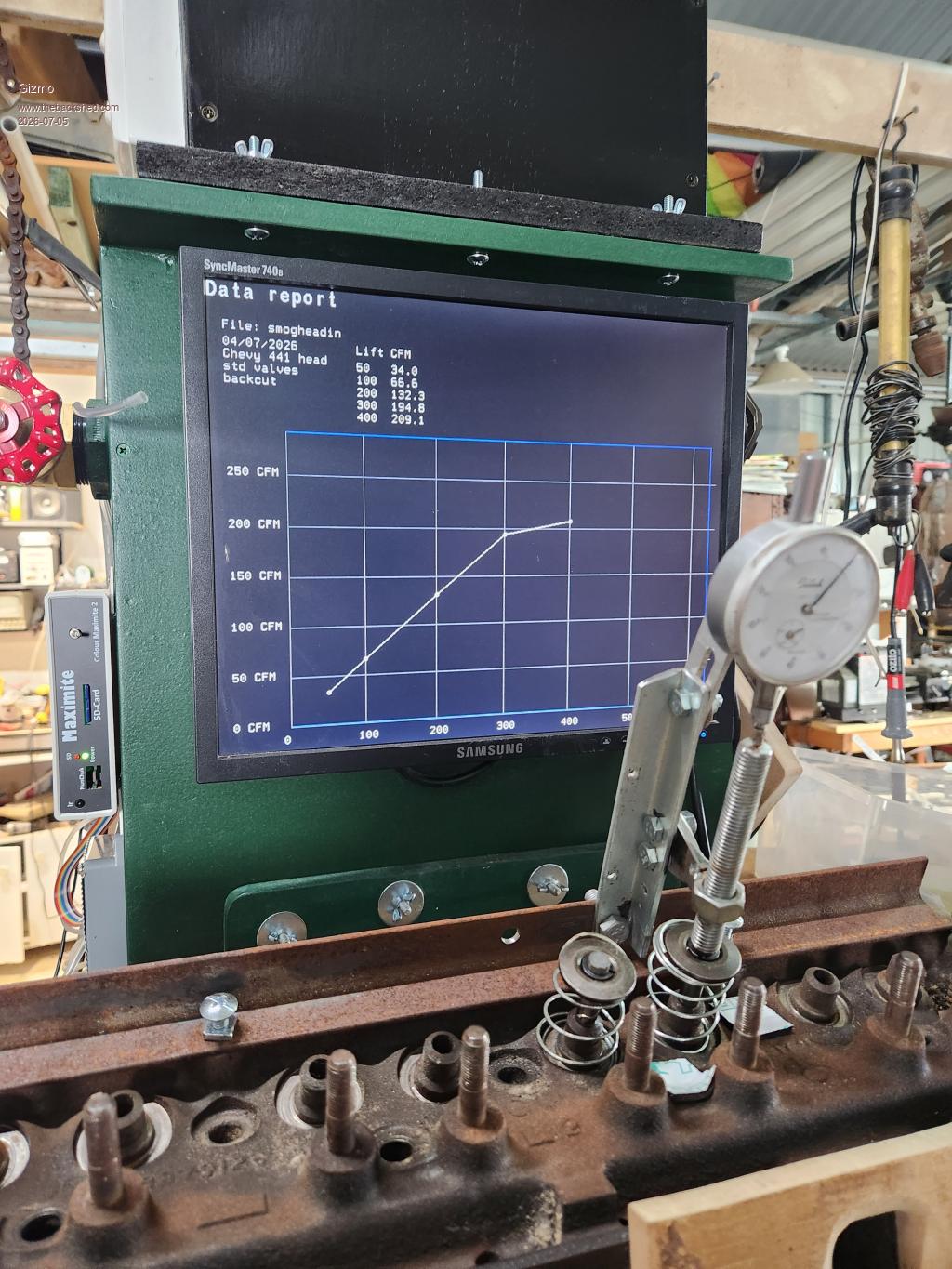
The code was written for a Colour Maximite 2 and is a work in progress. I used ChatGPT to help me write the function to get data from the barometric sensor MBE180, the rest is mine. Its not pretty, and still needs a lot of work. Usually when flowing something you are comparing it to a previous test, so the code can have a set of comparison data loaded as well as the "working file".
Eventually I'll document the whole project, but though I would share this for now.
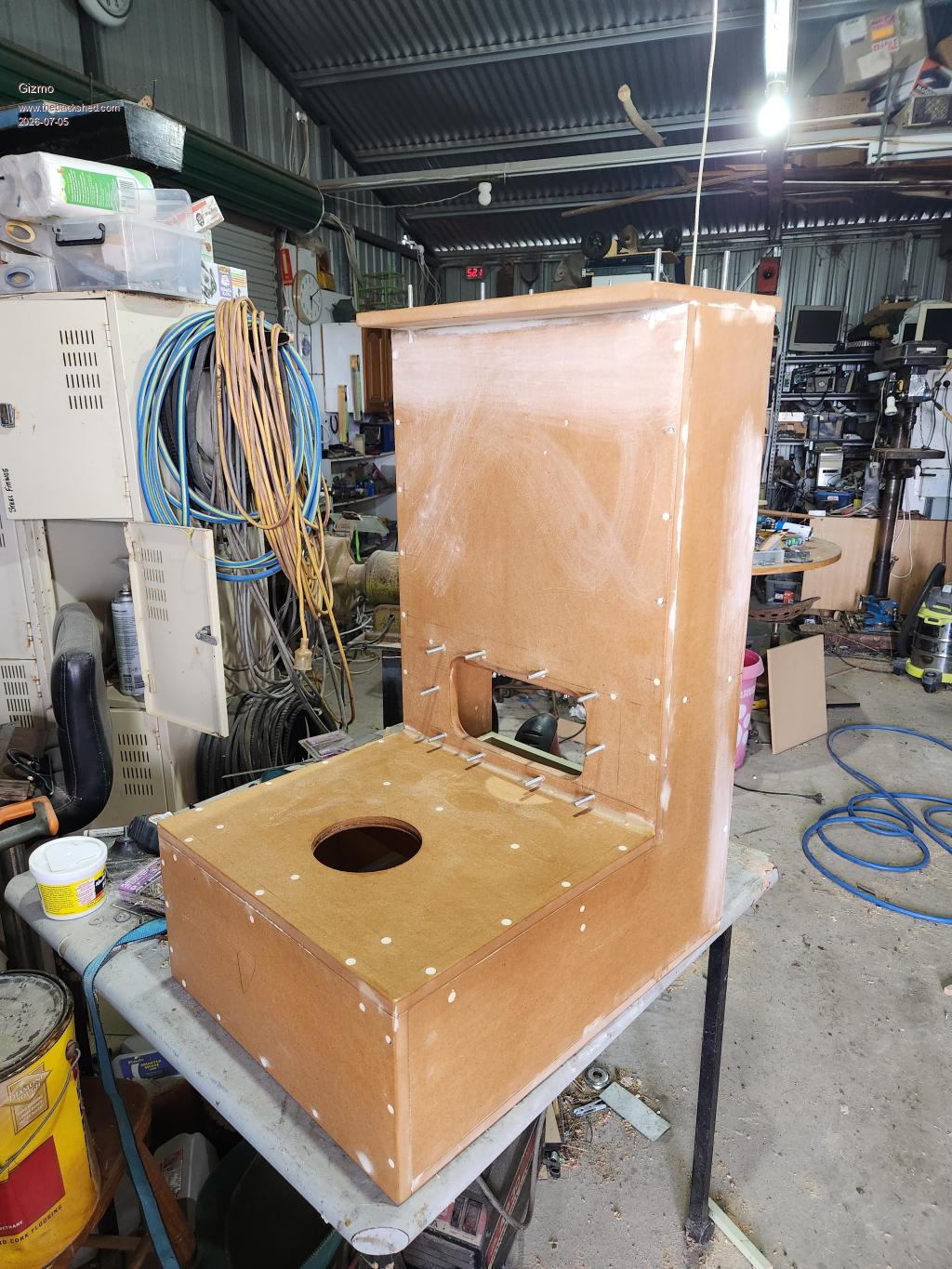
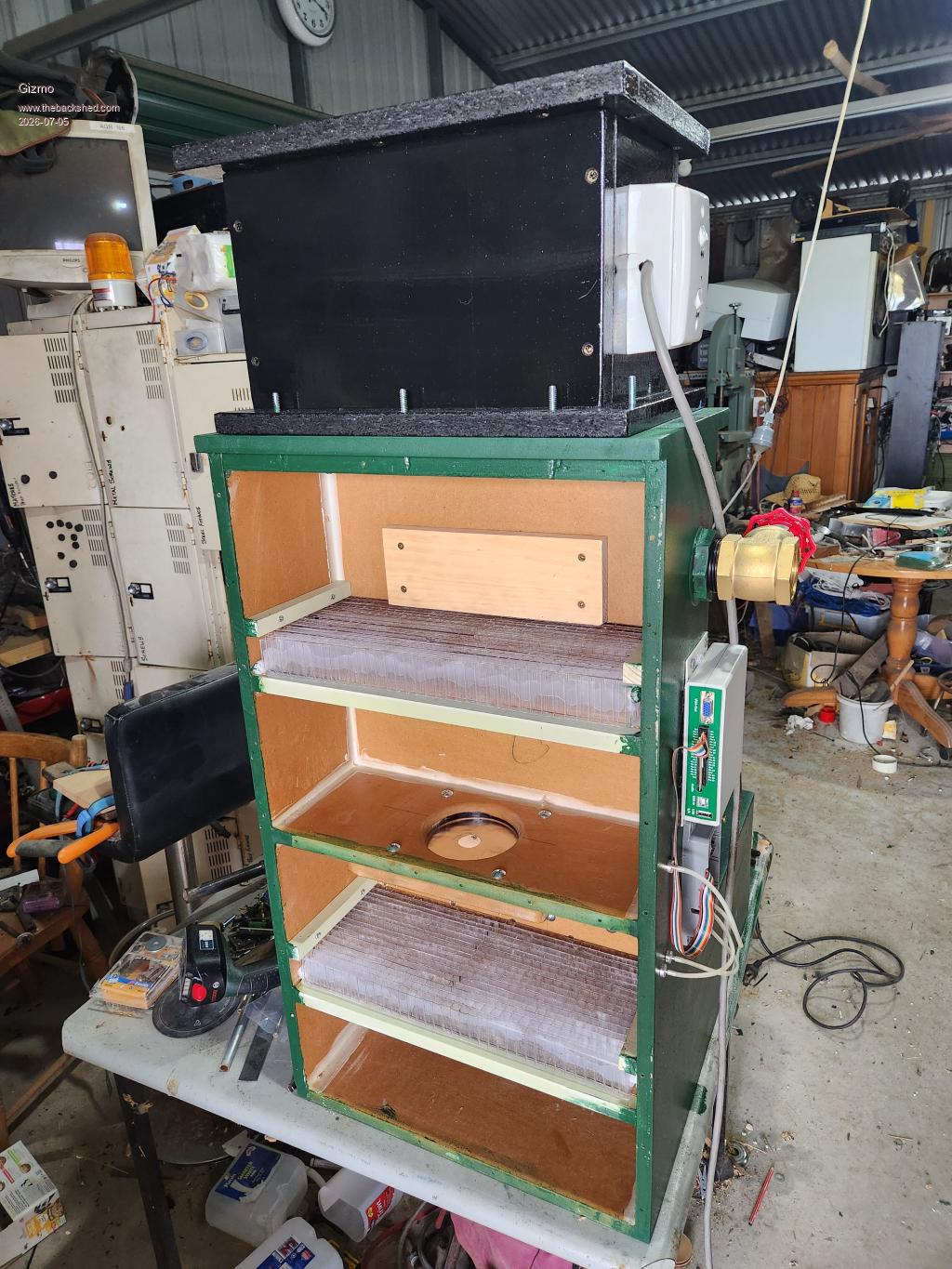
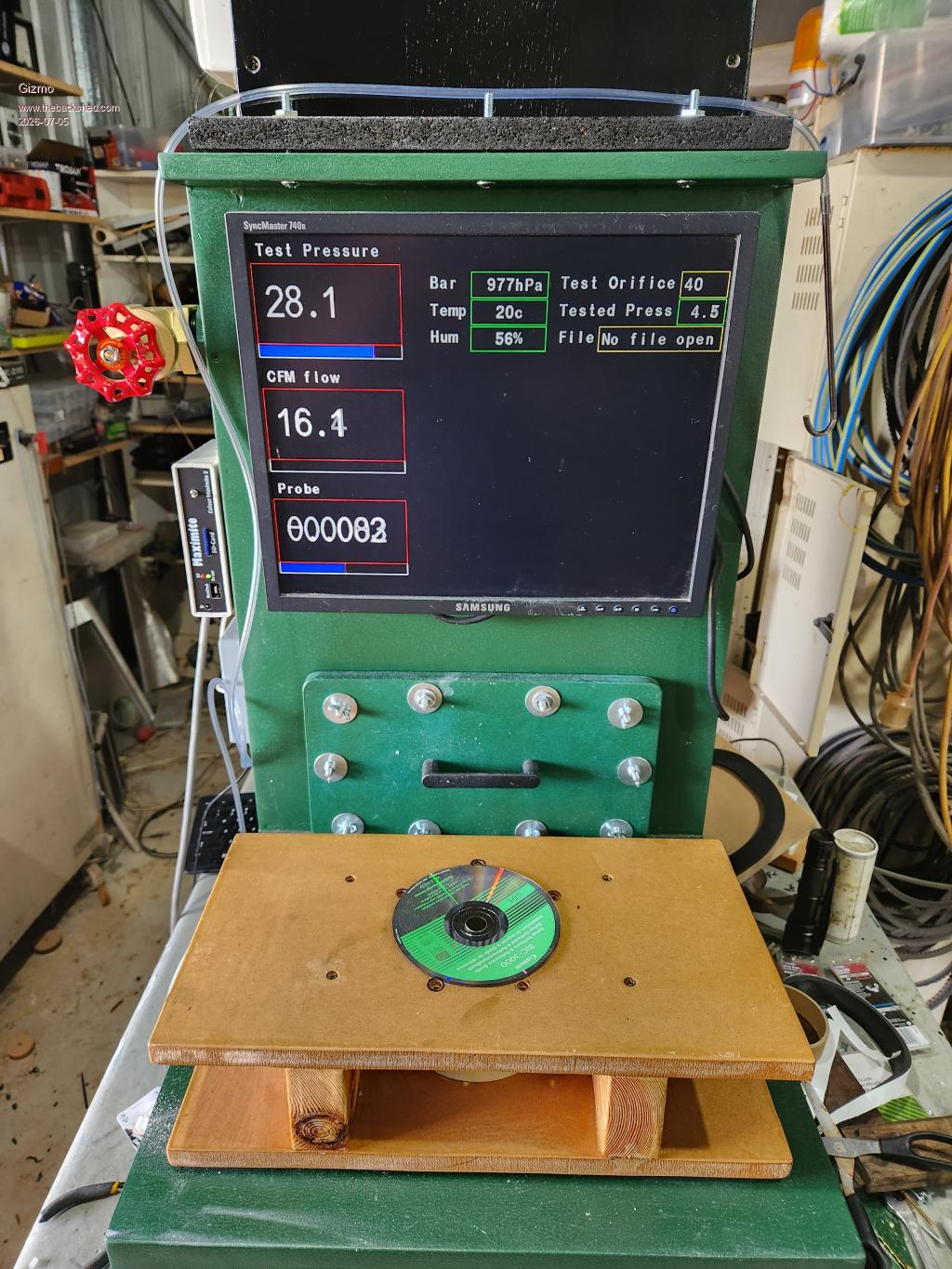
A CD is used as a standard flow bench test unit, 14.4CFM at 10 inches, This was before I calibrated the sensors. Calibration involves a bucket of water, a length of clear tube, and a ruler. Flow benches use 28 inches of water ( 1 PSI ) as a standard vacuum, but the software can calculate flow at a lower pressure.
flow.zip
Glenn
Edited 2026-07-05 15:43 by Gizmo
The best time to plant a tree was twenty years ago, the second best time is right now.
JAQ |
| |
Volhout

Guru

Joined: 05/03/2018
Location: NetherlandsPosts: 6118 |
| Posted: 05:59am 05 Jul 2026 |
Copy link to clipboard |
Print this post |
|
Wauw,
This is really inspiring. And practical use of mmbasic.
Thank you for sharing.
We need more of this kind of applications shown here
Volhout
Edited 2026-07-05 16:00 by Volhout
PicomiteVGA PETSCII ROBOTS |
| |
mikeb

Senior Member

Joined: 10/04/2016
Location: AustraliaPosts: 180 |
| Posted: 06:20am 05 Jul 2026 |
Copy link to clipboard |
Print this post |
|
Nice one.
Well done.
There are 10 kinds of people in the world.
Those that understand binary and those that don't. |
| |
Mixtel90

Guru
Joined: 05/10/2019
Location: United KingdomPosts: 9136 |
| Posted: 07:11am 05 Jul 2026 |
Copy link to clipboard |
Print this post |
|
What a lovely job, Gizmo! A credit to you. :)
I take my (virtual) hat off to anyone who can cut 12mm MDF straightish, never mind capable of being an airtight seal. Mind you, I don't have access to a table saw.
That carefully calibrated test orifice looks unusually similar to a CD. :)
Mick
Zilog Inside! nascom.info for Nascom & Gemini |
| |
mozzie
Guru
Joined: 15/06/2020
Location: AustraliaPosts: 431 |
| Posted: 07:27pm 18 Jul 2026 |
Copy link to clipboard |
Print this post |
|
G'day Gizmo,
Now that is one nice looking and well thought out piece of kit, very well done. The green paint also gives it that cast iron look of machines of old 
I would be very interested in further information on the construction of the unit, as I have toyed with the idea of building one for a very long time, and this has re-kindled that interest.
A couple of questions if you don't mind:
What are the rough overall dimensions?
With 2 motors what is the maximum flow rate?
Do you vary the motor speed to control pressure or is that what the 1-1/2" gate valve is for?
Do you think a Pico2 / PicoMite HDMI would work in place of the Colour Maximite?
About 35 years ago whilst tinkering with Mini's I aquired the "BIBLE" - "Tuning the A-Series Engine" by David Visard, this is a tomb of information and is all based on dyno graphs and flow bench results, and a flow bench has been on the wish list ever since.
Considering most of my work would be A-Series (Mini) and Rover 3.5L V8 (Buick 215 Nail Head V8) I could possible scale it down a bit as well.
Only major problem is where it would fit in the (already very full) shed?
Regards, Lyle. |
| |

 Notice. New forum software under development. It's going to miss a few functions and look a bit ugly for a while, but I'm working on it full time now as the old forum was too unstable. Couple days, all good. If you notice any issues, please contact me.