Notice. New forum software under development. It's going to miss a few functions and look a bit ugly for a while, but I'm working on it full time now as the old forum was too unstable. Couple days, all good. If you notice any issues, please contact me.
robert.rozee Guru Joined: 31/12/2012 Location: New ZealandPosts: 2528
Posted: 02:57pm 30 Nov 2025
Copy link to clipboard
Print this post
the following may interest some of you... the following is an 8-part series of restoration videos by CuriousMarc, where he gets a pair of 8080 'trainer' boards up and running, then proceeds to load up the original Bill Gates BASIC:
CuriousMarc's efforts inspired me to look into what sorts of modern 8080 SBC's were available. i came across this video, where a fellow builds something from scratch, including a USB port, then proceeds to whip up a BASIC interpreter:
while he hasn't (as far as i can tell) published his code anywhere, assuming it is all genuine this does open up some interesting avenues!
cheers, rob :-)
btw: i've been using FreeTube to watch youtube videos recently. it makes the whole experience far more pleasant! https://freetubeapp.io/ Edited 2025-12-01 01:02 by robert.rozee
scruss Regular Member Joined: 20/09/2021 Location: CanadaPosts: 97
Posted: 11:59pm 02 Dec 2025
Copy link to clipboard
Print this post
8080A is such an annoying CPU to interface with. Its voltage and clock requirements make it a real dinosaur.
Another modern (and very small) 8080 machine is Lee Hart's Altaid 8800. It's an Altair that fits into an Altoids tin. It's a finicky build, and the software isn't quite as finished as it should be, but you can run code on it with blinkenlights on the front panel.
Geoffg Guru Joined: 06/06/2011 Location: AustraliaPosts: 3362
Posted: 04:29am 03 Dec 2025
Copy link to clipboard
Print this post
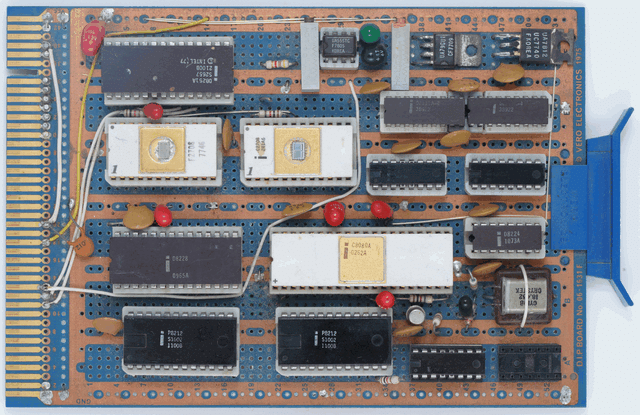
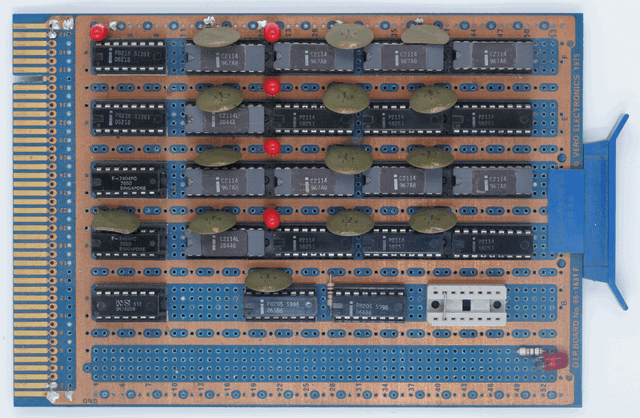
Slightly off topic… In the late 1970s I built a computer using the 8080A and Intel's interface and memory chips. It had 256 bytes of RAM and 2KB of EPROM. Interface was via a serial port and an ASCII terminal, and the EPROM contained a monitor program which allowed me to enter data into memory, read the memory, read registers, etc on the terminal - so you did not need front panel switches and lights. It could also load/save programs via an audio tape cassette recorder.
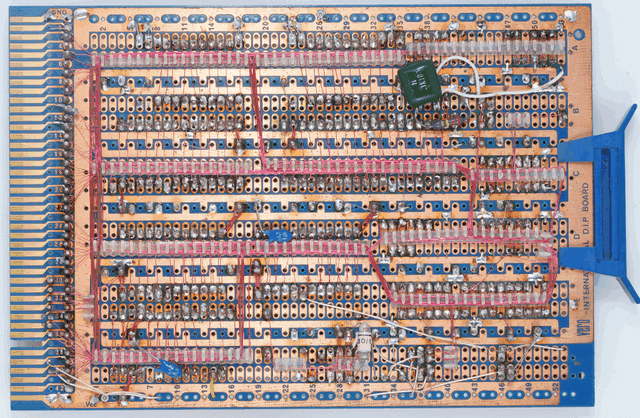
It used a prototyping system made by Vero which was like wire wrap except that the enamel on the wire was a solder flux and at the terminating point you soldered the wire to the terminal rather than wrapping it around a pin.
I quickly found that 256 bytes of RAM was way too small, so I built an 8KB RAM board which plugged into a proprietary bus of my own invention. Knowing me I probably called it the Geoff Bus.
Ah, those were the days. It gave endless fun and you learned to program with very little memory and no compilers.
Geoff Edited 2025-12-03 18:14 by GeoffgGeoff Graham - http://geoffg.net
Mixtel90 Guru Joined: 05/10/2019 Location: United KingdomPosts: 8904
Posted: 08:10am 03 Dec 2025
Copy link to clipboard
Print this post
I used the Verowire system to build a little board for a z80. Just4Fun's Z80-MBC "4$ 4 ICs". It uses a Z80, a static RAM (64K used from a 128K chip), a 7400 and an Atmega32A as the ROM, clock generator, glue logic and serial port. It's a great little project and runs CP/M nicely. I threw in a RTC and a parallel port.
I liked using Verowire, although those little spools could work out expensive. I think the system is still available at a cost.Mick
IanT Senior Member Joined: 29/11/2016 Location: United KingdomPosts: 130
Posted: 08:52am 03 Dec 2025
Copy link to clipboard
Print this post
Mmmn - I've used Verowire to connect up my RP2350B 'DIL' PCB to an HDMI socket on a Eurocard - which works just fine. It's been put to one side but will have a SD card, keyboard, RTC and I/O connectors added when I get around tuit. I've a nearly full reel on the pen and another spare one that I must have purchased several decades ago.
I'd always assumed Vero was a UK company but it seems not. Checking for new wire spools, they are available in the US for $18 for qty 4. Add in shipping and it's going to be a bit expensive I'd guess. RS don't stock them any more...
I probably have enough to finish the 2350B Euro board but it seems an alternative method is going to be required. Of course, I still have that very large reel of wirewrap from my backplane repair days but wirewrap needs long pins to wrap to and I really don't fancy going back to that...
Any other suggestions?
Regards,
IanT
JohnS Guru Joined: 18/11/2011 Location: United KingdomPosts: 4335
Posted: 09:04am 03 Dec 2025
Copy link to clipboard
Print this post
Thankfully I didn't really suffer the 8080A as I soon had access to 8085 boards - and I didn't have to do any hardware design etc, just write software.
Using a PDP-11 with macros (in DEC's MACRO-11) to fairly closely approximate Intel's instruction set - I was so lucky!
I never loved (UV-erased) EPROMs, but mostly could debug in RAM :) (Sometimes using a version of CP/M's DDT I re-hosted not to need CP/M, but before that it was patterns on lights or the like.)
The semi-torture was the 8255A and its documentation... (I felt it could do just about anything once you figured out how.)
John
Mixtel90 Guru Joined: 05/10/2019 Location: United KingdomPosts: 8904
Posted: 09:31am 03 Dec 2025
Copy link to clipboard
Print this post
Wirewrap can be done on shorter pins but it's not good for bus wiring like that. You may not get two wraps on the pin. Perhaps you could do the bus in Verowire and the point to point in wirewrap, Ian? It would use less of that expensive wire. I'm not sure if I have any left now. I know I ran out of combs for it.
I never used the Intel chips as I started with the Z80 on the Nascom-1.
2708 EEPROMs were a pain voltage-wise and remarkably fragile electrically. The later single-supply chips were a lot easier. I had a bulk eraser made from a germicidal tube inside a box made from lengths of 4x2 plastic trunking. :) Flippin' dangerous.... lol
The RP2530 would make a nice EEPROM emulator now. Enough pins for address, data and control.Mick
Martin H. Guru Joined: 04/06/2022 Location: GermanyPosts: 1459
Posted: 10:25am 03 Dec 2025
Copy link to clipboard
Print this post
I had the “pleasure” of having to learn 8080/8085 assembler during my apprenticeship. Personally, back then I found the Motorola 6809 much more appealing. MFA 85 Edited 2025-12-03 20:26 by Martin H.'no comment
Geoffg Guru Joined: 06/06/2011 Location: AustraliaPosts: 3362
Posted: 12:18pm 03 Dec 2025
Copy link to clipboard
Print this post
I can still remember some 8080 op codes from hours of tedious hand assembly, then keying them into memory. For example, JMP (jump) is C3 in hex,
nbrok Regular Member Joined: 13/02/2023 Location: NetherlandsPosts: 62
Posted: 02:53pm 03 Dec 2025
Copy link to clipboard
Print this post
My first cpu was also a SC/MP and later the 8052/z80/68hc11 and 6809. After a lot of years I still remember the SC/MP instructions. Edited 2025-12-04 00:53 by nbrokGreetings, Nick de pe1goo
Mixtel90 Guru Joined: 05/10/2019 Location: United KingdomPosts: 8904
Posted: 04:12pm 03 Dec 2025
Copy link to clipboard
Print this post
I always fancied having a go with the SC/MP but it never came to pass. On the Nascom-1 everything was done through the monitor, which used the Z80 restart jumps to create pseudo-commands. It was very neat. It produced such things as relative calls, which were great for making relocatable code and standard text output was i byte followed by your text string terminated by a zero byte. Fully automatic.Mick
matherp Guru Joined: 11/12/2012 Location: United KingdomPosts: 11499
Posted: 04:46pm 03 Dec 2025
Copy link to clipboard
Print this post
I keep meaning to write a Science of Cambridge MK14 emulator for the PicoMite. Should be easily possible in Basic. Would, of course, use 16 segment leds for the display
Mixtel90 Guru Joined: 05/10/2019 Location: United KingdomPosts: 8904
toml_12953 Guru Joined: 13/02/2015 Location: United StatesPosts: 655
Posted: 09:36pm 03 Dec 2025
Copy link to clipboard
Print this post
I agree. I was programming Altairs and then PC clones (same type of architecture) and when I got my first 6809 (Color Computer 2) I was blown away at how easy the '09 assembly language is. I was thrilled that there's a multiply instruction but disappointed that there is no divide.
GerryL Regular Member Joined: 24/01/2019 Location: AustraliaPosts: 44
Posted: 10:30pm 03 Dec 2025
Copy link to clipboard
Print this post
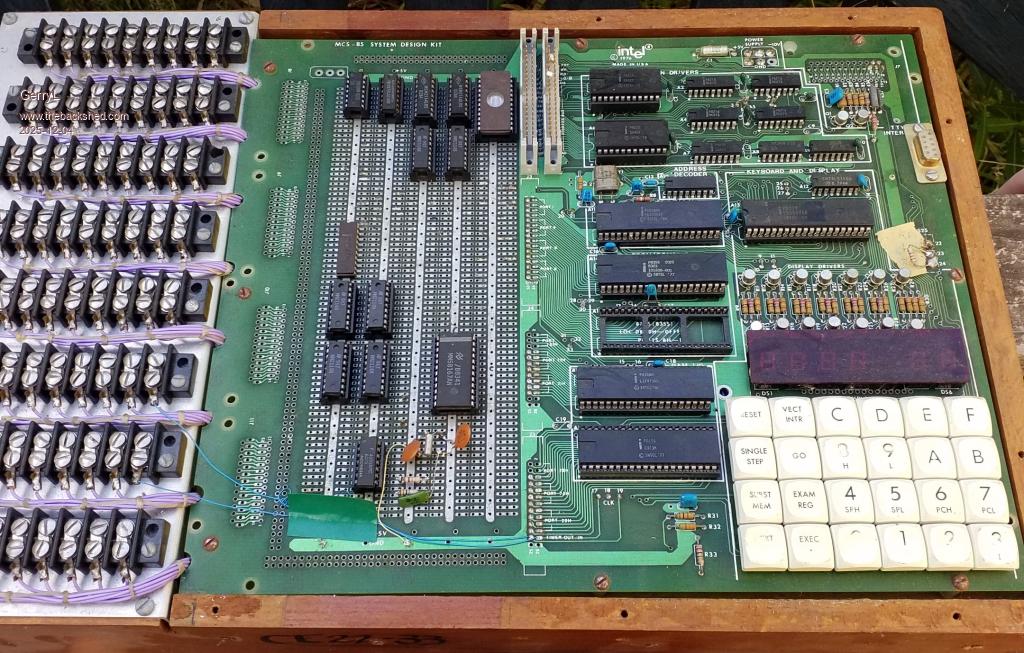
I started my programming journey on the 8085 using the SDK-85 kit, which I still have in the shed. The keyboard is well worn from all the hand assembly, until I added a serial interface and could load from a work TTY using punched tape. I added some extra RAM and a RTC. Hand assembly gave you a great appreciation of making sure your program was correct before going to all the trouble to enter it. I still have the Osborne & Associates book, 8080A/8085 Assembly Language Programming, 1978, which was a bit of a bible back in the early 1980's.
Gerry
IanT Senior Member Joined: 29/11/2016 Location: United KingdomPosts: 130
Posted: 11:28pm 03 Dec 2025
Copy link to clipboard
Print this post
By the time I gave up hoping to find a CPU board for my scrap-yard PDP8, the Nascom 2 had arrived and it drove me crazy one sleepless weekend looking for dry joints but it was the Bees knees of UK kit computers at the time! I still have my Captain Zilog poster somewhere...
As for those PDP 11/34's and similar 'pink' DEC 16 bitters, I had a whole two extra bits at my command when flicking the switches on the lovely blue front panel of a PDP15. It had core memory, twin 32Kb fixed disks and a speed dial, so you could clock the CPU from zero to whatever the top wack was (can't remember now) because not everything on the bus could handle full speed! Slow to Warp 3 Mr Data, we've left the tape decks behind...
If I'm honest I still struggle with Hexidecimal, Octal is so much easier to read :-(
Regards,
IanT
NPHighview Senior Member Joined: 02/09/2020 Location: United StatesPosts: 221
Posted: 04:36am 04 Dec 2025
Copy link to clipboard
Print this post
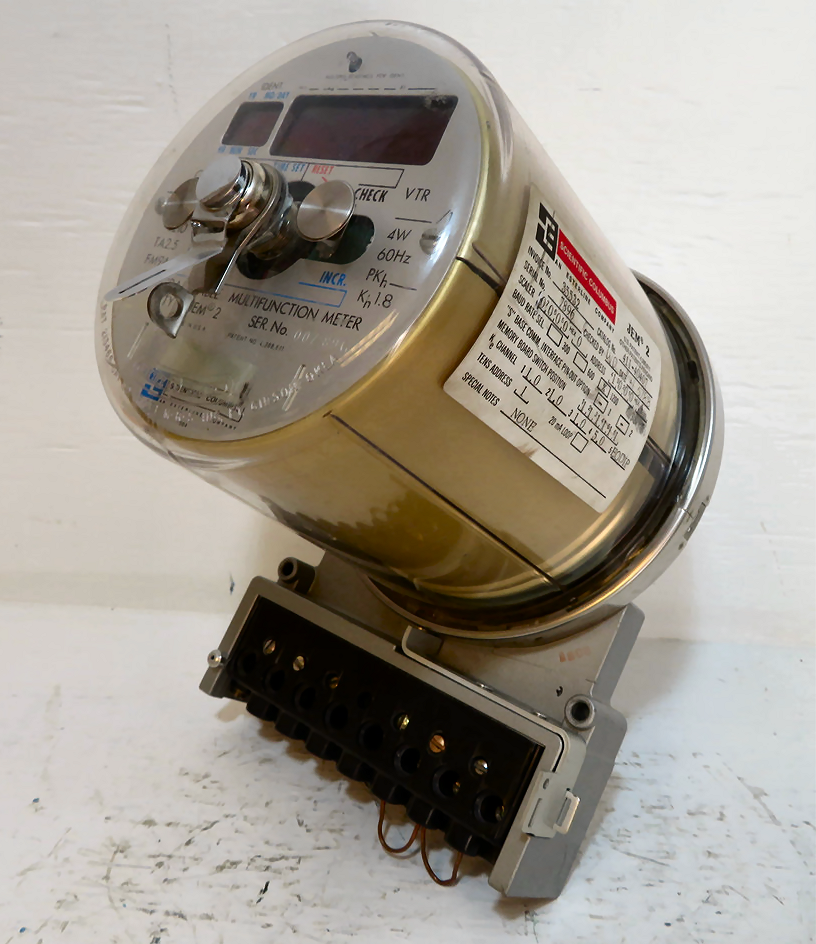
I'm guessing that you didn't have to maintain 25,000+ lines of 1802 Assembler code that drove an electrical power meter ("Scientific Columbus Joule Electric Meter", circa 1984). It got old really fast. I asked "Why the 1802?" at one point - they said "It's 12V CMOS - electrical disruption won't bother it."
I had moved from PDP-11's beautifully orthogonal instruction set to PL/M on the 8085 to a very primitive assembler for the 1802 over a few different projects, and felt my world shrink with each change. The 1802 was particularly idiosyncratic, as there were (as I recall) no "call" or "return" instructions. You had to explicitly push the current program counter onto the stack, and move the subroutine's starting address to the program counter, at which point the subroutine would run. Then, explicitly pop the return address off the stack, increment it, and move it into the program counter, at which execution would continue from the calling address. This accomplished in about 20 opcodes what the "call" and "return" opcodes would do in 8085 assembler.Live in the Future. It's Just Starting Now!
Page 1 of 2
Print this page
The Back Shed's forum code is written, and hosted, in Australia.

 Notice. New forum software under development. It's going to miss a few functions and look a bit ugly for a while, but I'm working on it full time now as the old forum was too unstable. Couple days, all good. If you notice any issues, please contact me.


 Print this post