Notice. New forum software under development. It's going to miss a few functions and look a bit ugly for a while, but I'm working on it full time now as the old forum was too unstable. Couple days, all good. If you notice any issues, please contact me.
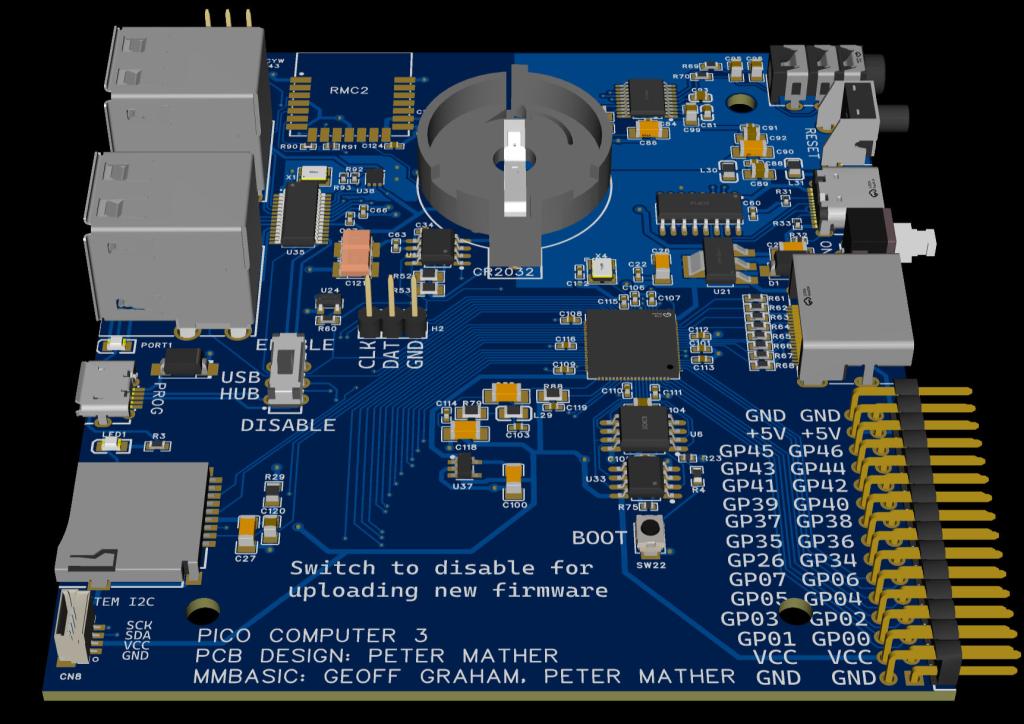
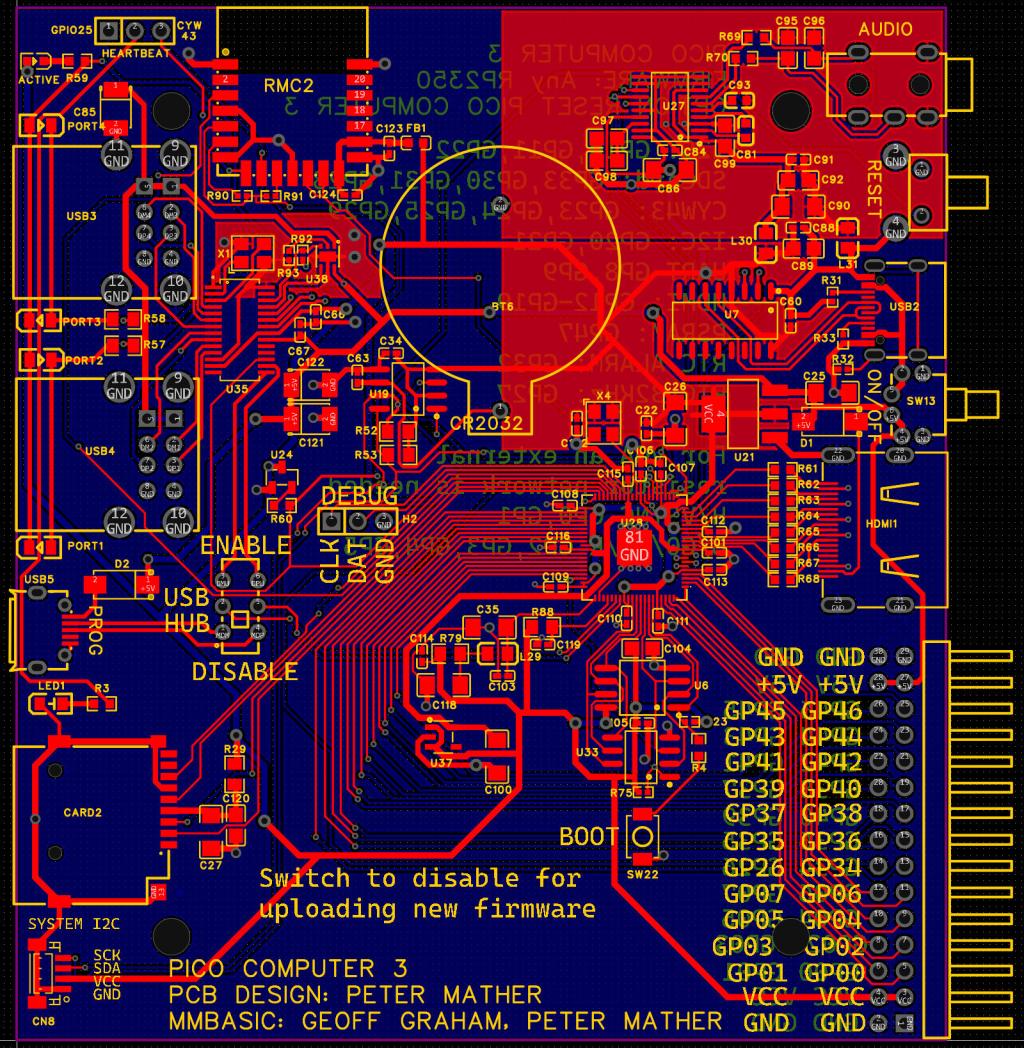
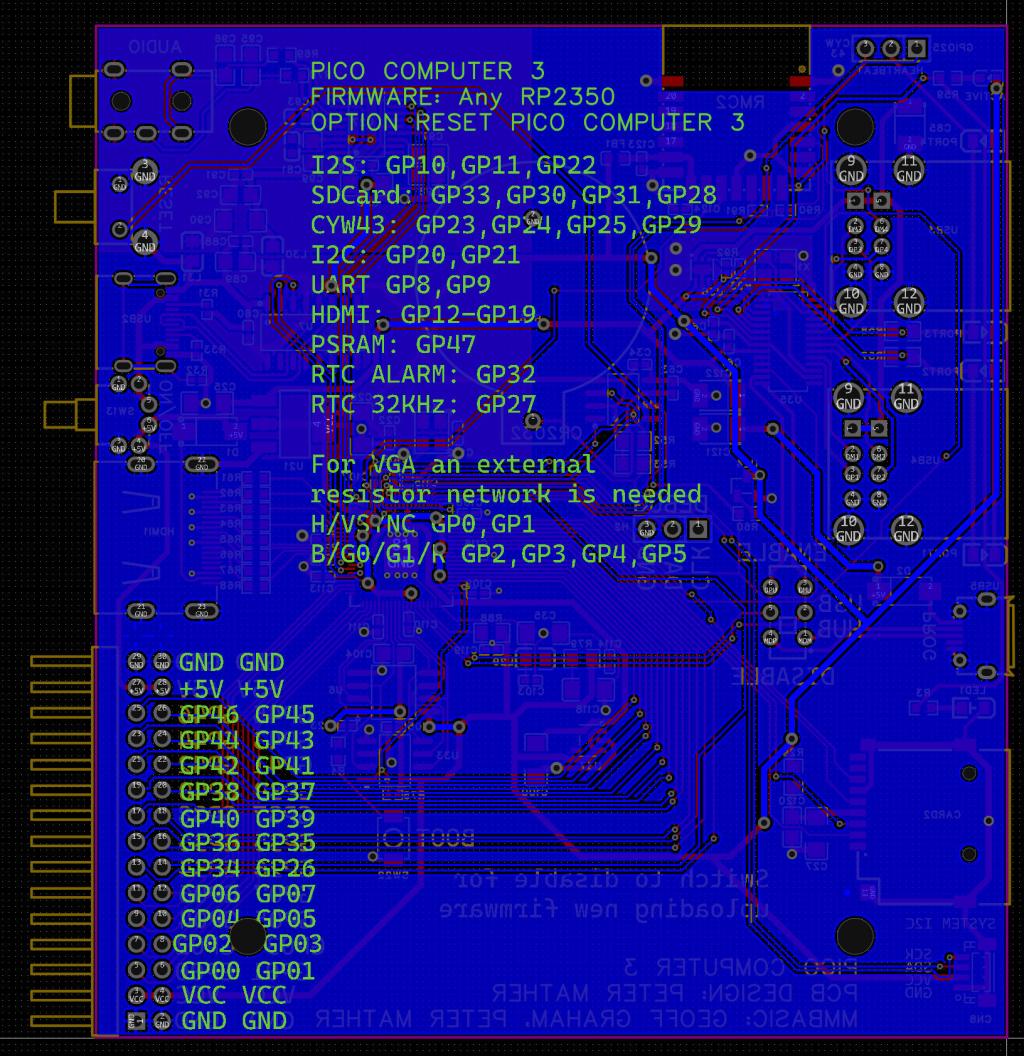
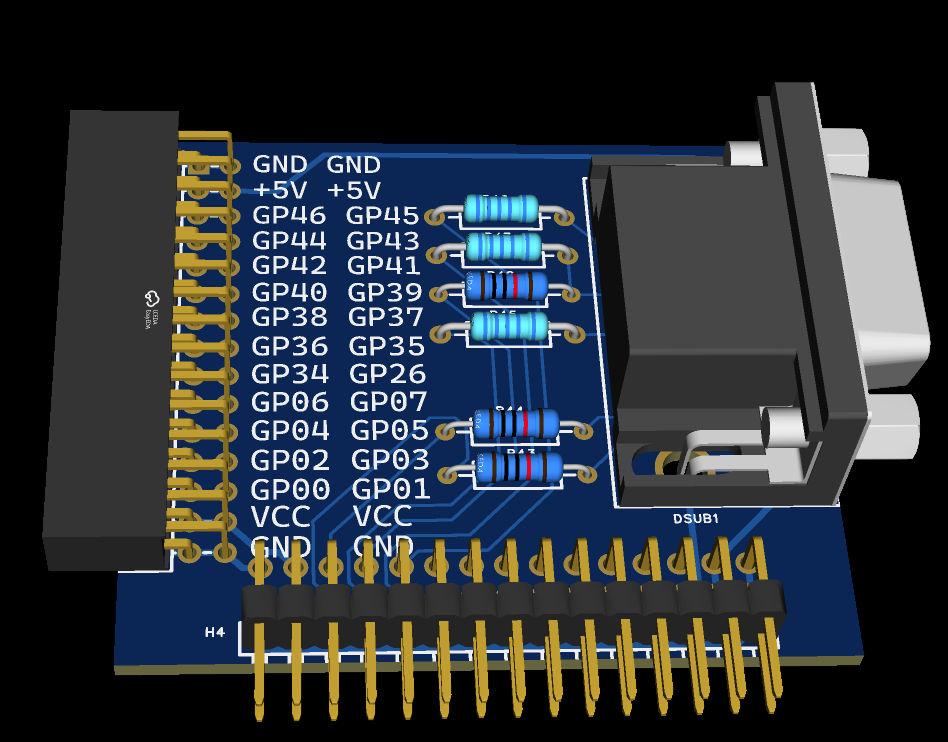
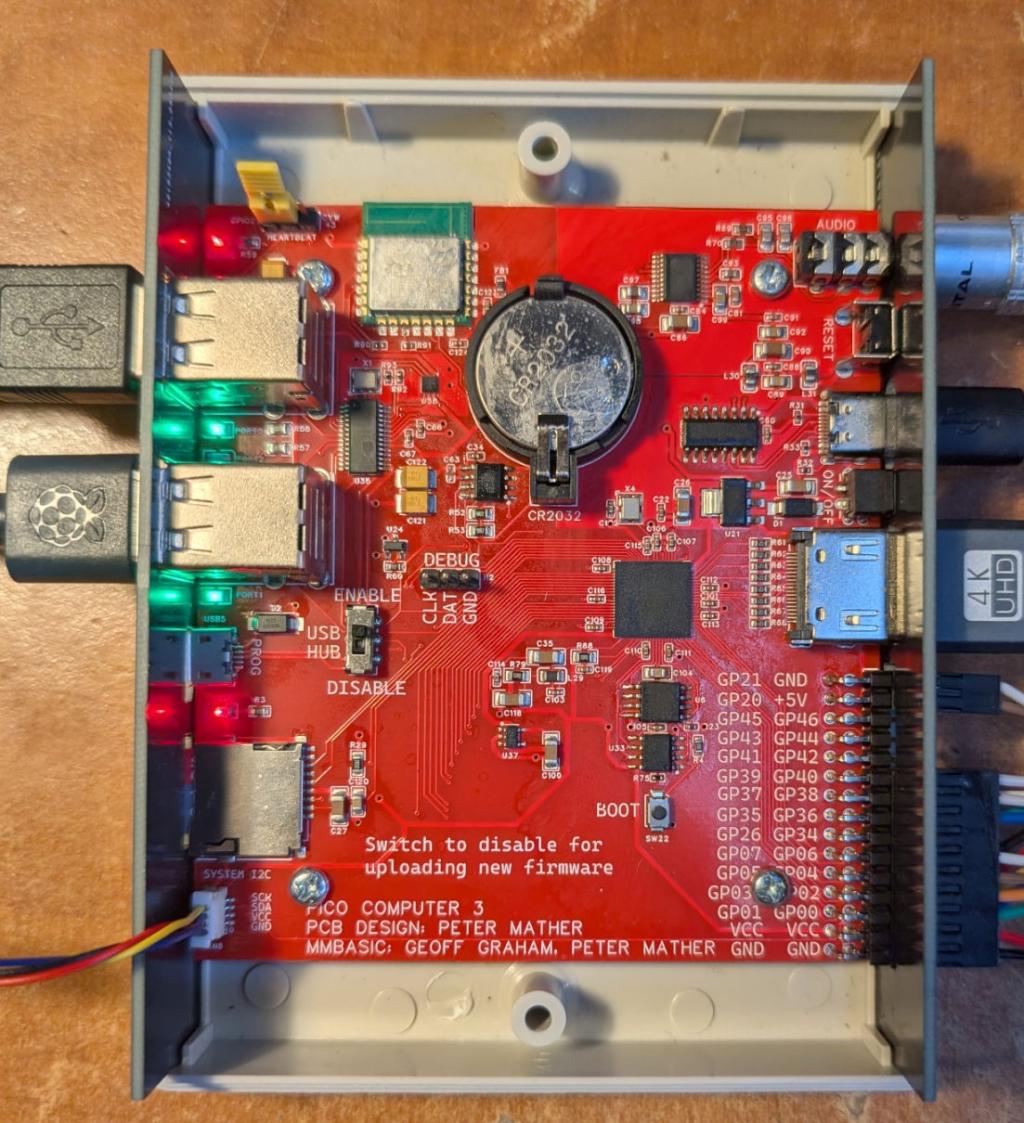
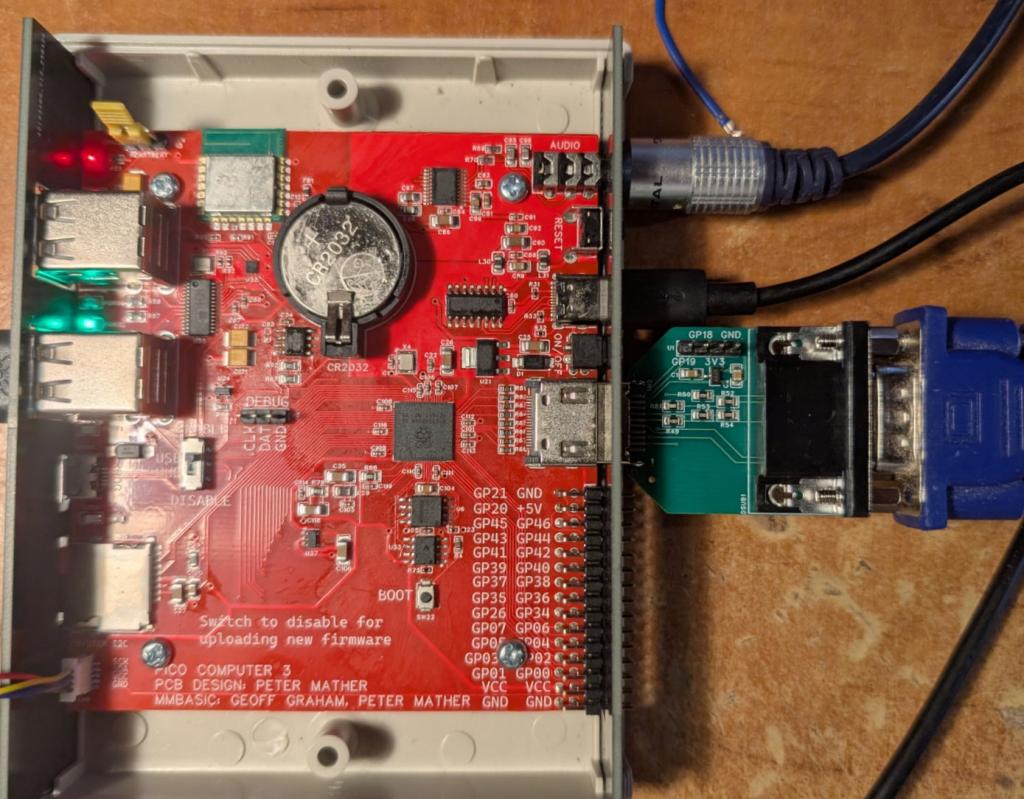
This is configured using OPTION RESET PICO COMPUTER 3 with the 6.03.00 firmware (RC18 onwards. This configuration applies to every RP2350 build. In the case of VGA builds you can use a little PCB adapter to connect to the I/O port.
In the case of the WEB and bluetooth builds it uses the official Raspberry Pi RM2 (RMC20452T) wireless module which effectively makes the board a super RP2350B Pico2-W
I've been using a first prototype to test the new HDMIWEB build and all looks good. Note that I've simplified the DVDD supply by using a fixed 1.3V regulator which works perfectly up-to 396MHz and the board now includes a 4 Pin JST-SH Cable (Qwiic, STEMMA QT, Qw/ST) connector to allow modules to be chained off it if required. I've also replaced the p-channel mosfet which switched the USB host 5V rails with a proper higher power but current limiting switch.
As before the board provides I2S audio has a DS3231 RTC and all the usual goodies. I'm waiting on a second prototype that has a trivial pin usage change and assuming all good will then release the gerbers. Cost for a board fully populated other then the RM2 module (JLC/LCSC don't yet stock it, but they did do the PCB layout for me) is about USD45 each in 5-off quantity Edited 2026-06-13 21:40 by matherp
lizby Guru Joined: 17/05/2016 Location: United StatesPosts: 3881
Posted: 01:42pm 13 Jun 2026
Copy link to clipboard
Print this post
With PSRam. Super indeed. How solderable is the Wifi module? Any suggestion from JLC that they will stock it?
grumpyoldgeek Regular Member Joined: 30/07/2018 Location: United StatesPosts: 58
Posted: 04:43pm 13 Jun 2026
Copy link to clipboard
Print this post
Beautiful. I want two of them.
matherp Guru Joined: 11/12/2012 Location: United KingdomPosts: 11881
Posted: 05:05pm 13 Jun 2026
Copy link to clipboard
Print this post
The RM2 is solderable by hand. The pads extend a bit beyond the outline of the device and it has solder pad cutouts like the Pico. However, the easy way is a bit of solder paste and a heatgun - all done in 10 seconds
jvanderberg Regular Member Joined: 06/05/2026 Location: United StatesPosts: 86
Posted: 01:42am 14 Jun 2026
Copy link to clipboard
Print this post
That looks lovely. How's the USB hub work? I will take a look at how you do the 1v1 rail because I hate their precious inductor, and having adjustable voltage really has little value unless you care about power consumption.
robert.rozee Guru Joined: 31/12/2012 Location: New ZealandPosts: 2552
Posted: 04:30am 14 Jun 2026
Copy link to clipboard
Print this post
hi Josh, right above the first image in the top posting from Peter is a link for downloading a PDF of the schematic. it uses a TLV70313DBVR which is a 300mA LDO linear regulator providing a 1.3v output. this feeds directly to DVdd on the RP2350.
cheers, rob :-) Edited 2026-06-14 14:31 by robert.rozee
jvanderberg Regular Member Joined: 06/05/2026 Location: United StatesPosts: 86
Posted: 04:44am 14 Jun 2026
Copy link to clipboard
Print this post
Yep, I saw the schematic, thus 'I will have to take a look.' Thanks.
Grogster Admin Group Joined: 31/12/2012 Location: New ZealandPosts: 10043
Posted: 05:07am 14 Jun 2026
Copy link to clipboard
Print this post
He's at it again, folks!
Looks good.
I like the idea of native HDMI, but you can have VGA via the wee external adapter board if you want. That covers all the bases very nicely, I think! Smoke makes things work. When the smoke gets out, it stops!
Mixtel90 Guru Joined: 05/10/2019 Location: United KingdomPosts: 9136
Posted: 06:53am 14 Jun 2026
Copy link to clipboard
Print this post
Of course, you could probably make an adapter to fit the HDMI output to give vga via a suitably tweaked resistor network. You have 8 GPIO pins you can toggle when the HSTX isn't being used. You can subtract 220R from each VGA resistor.Mick
javavi Guru Joined: 01/10/2023 Location: UkrainePosts: 609
Posted: 11:35am 14 Jun 2026
Copy link to clipboard
Print this post
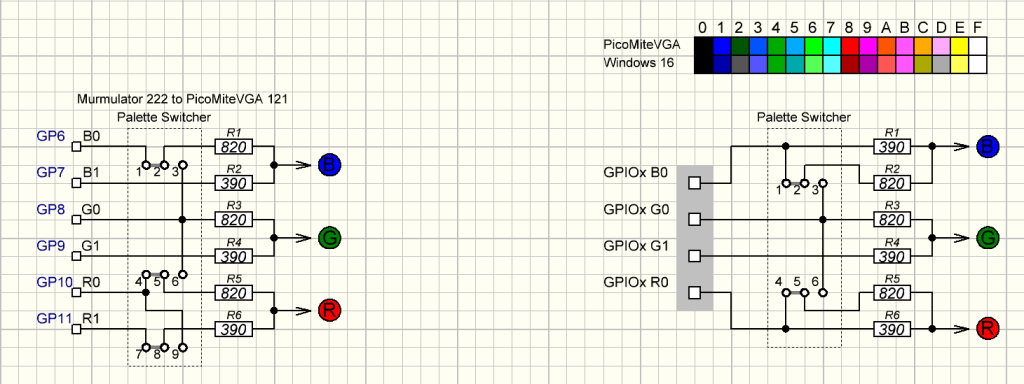
It is possible to make a palette switch for the VGA video output adapter By the way, the VGA adapter doesn't necessarily have to be external. You can create a series of HSTX pins on the board and connect the VGA adapter board to them when needed. Moreover, you don't even have to disconnect it; experience has shown that the connected VGA resistor matrix doesn't affect the HDMI video output. Edited 2026-06-14 21:58 by javavi
Volhout Guru Joined: 05/03/2018 Location: NetherlandsPosts: 6118
Posted: 02:41pm 14 Jun 2026
Copy link to clipboard
Print this post
Javavi,
Note there is already 220 ohm on the HDMI main board. You have to adapt resistor values, which rules these jumperable options out (outputting pure blue will feed back into R and G).
Mixtel90 Guru Joined: 05/10/2019 Location: United KingdomPosts: 9136
Posted: 03:25pm 14 Jun 2026
Copy link to clipboard
Print this post
You can't "create" HSTX pins anywhere, they are fixed in hardware and are non-defineable. You can, with some risk, parallel them to other pins but it's not recommended due to the very high frequencies involved. You might get away with it, you might not. There's no need to do it anyway. We have a standard connection for VGA on the PicoMite, adding alternatives introduces software compatibility issues with PicoMite software which are best avoided.
As we are designing a socket adapter, not a VGA output, the 220R series resistors are fixed and there is no direct access to the HSTX pins.Mick
Cost for 5 boards fully built is just under USD180 + any applicable tax and shipping. You can save money by soldering headers etc. yourself. I bought them without headers, flash, RTC, PSRAM and UART chips and cannibalised old boards for these, that brought the price under USD100. JLC don't stock the wireless module but it is available from Pimoroni amongst other places. Of course, it isn't needed for the board to work with one of the non-Web firmware builds. It can run any of the RP2350 firmware builds and you can use OPTION RESET PICO COMPUTER 3 to configure it.
I have 3 spares available for GBP40 for anyone in the UK who wants one - PM me if interested. GBP44 if you want the wireless module included. Edited 2026-06-26 04:03 by matherp
matherp Guru Joined: 11/12/2012 Location: United KingdomPosts: 11881
Posted: 03:30pm 26 Jun 2026
Copy link to clipboard
Print this post
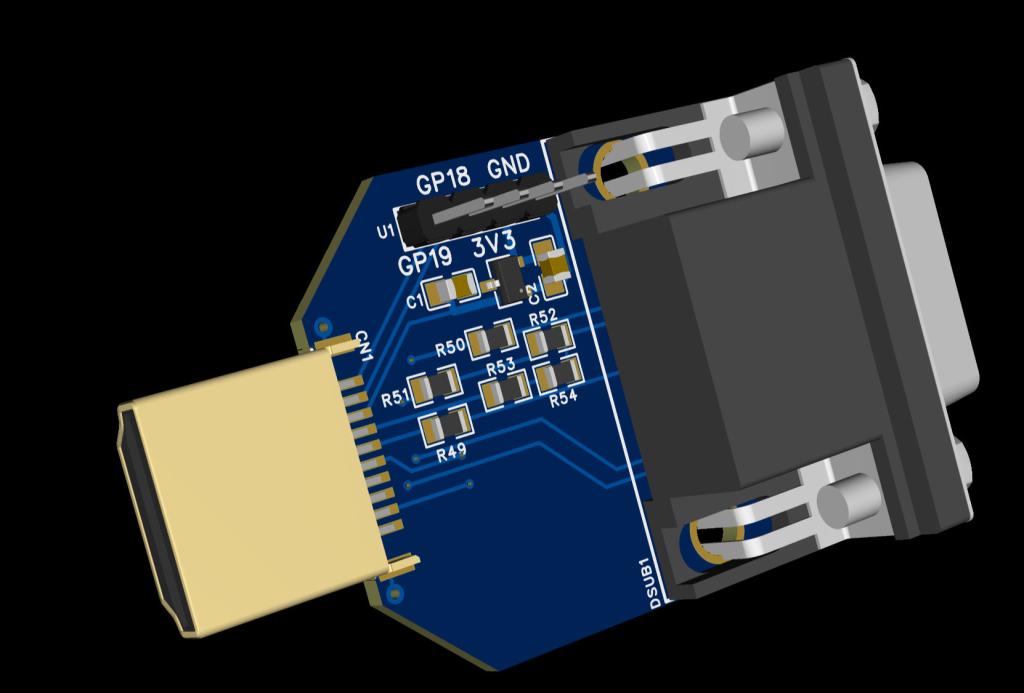
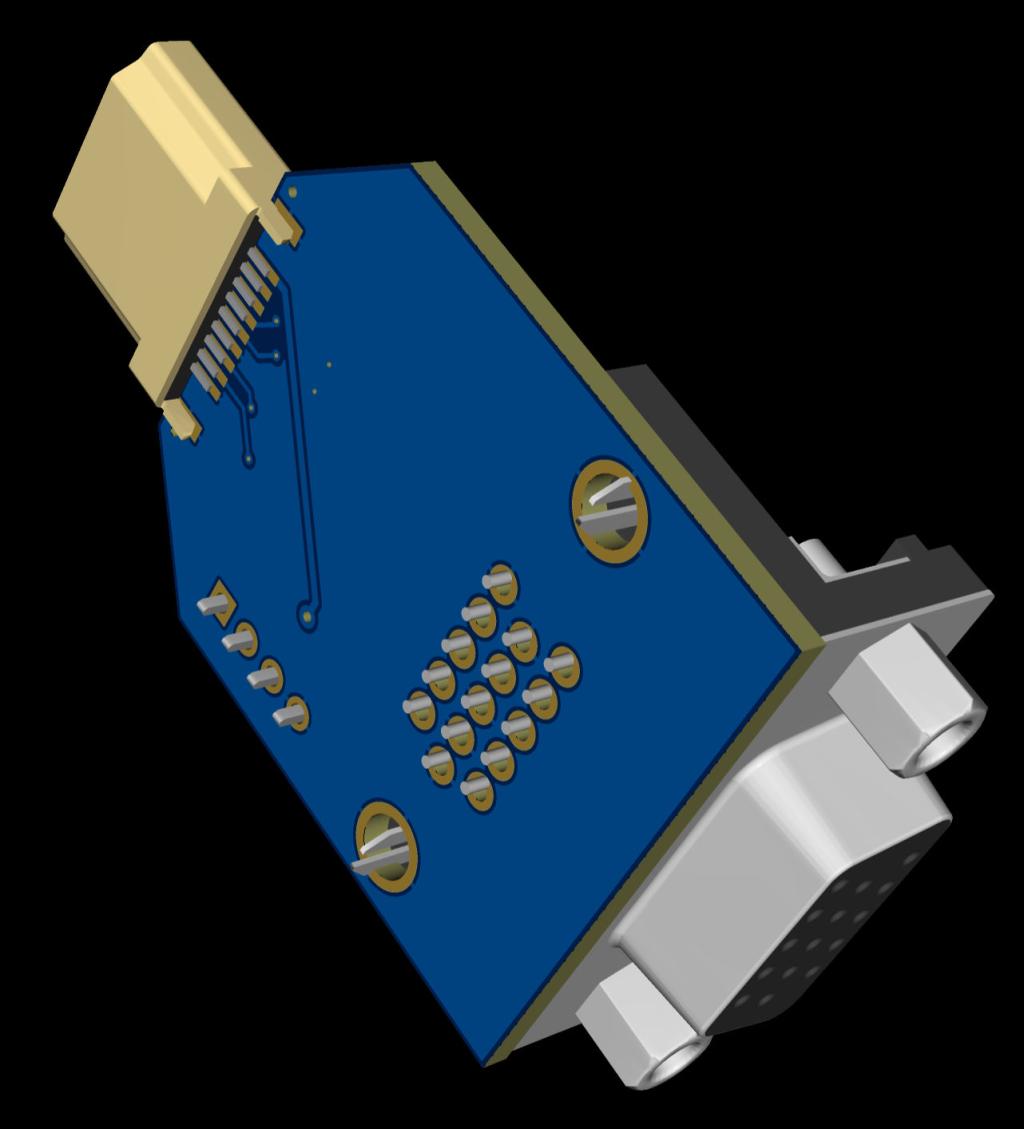
The HDMI/VGA adapters have arrived from JLC. I just got the board made up by JLC with the SMD resistors - with a discount token this cost me USD8 including tax and shipping!. I then bought the Male HDMI connector from LCSC. This mounts to both sides of the PCB but is really easy to solder as the pin spacing is effectively twice that of a normal HDMI connector (flat side up), the VGA connector and headers I already had in stock. This means I can test or use every RP2350 build with the same main Pico Computer 3 PCB and this adapter OPTION RESET PICO COMPUTER 3, OPTION VGA PINS GP12, GP14
okwatts Regular Member Joined: 27/09/2022 Location: CanadaPosts: 88
Posted: 06:57pm 26 Jun 2026
Copy link to clipboard
Print this post
Hi Lizby, I'm in for one, as if the several designs I have already are not enough! PM me when you have a price and need payment. Also if you a spare MB for Mixtel's RPZ module and other addons let me know and you can include that as well.
Page 1 of 9
Print this page
The Back Shed's forum code is written, and hosted, in Australia.

 Notice. New forum software under development. It's going to miss a few functions and look a bit ugly for a while, but I'm working on it full time now as the old forum was too unstable. Couple days, all good. If you notice any issues, please contact me.


 Print this post